


Understanding Swales and Their Impact on Water Management
- Harry Merrill
- Apr 10
- 3 min read

Water management is a critical challenge in many regions, especially where rainfall is irregular or soil erosion threatens the land. Swales offer a practical and natural solution to these problems. They help control water flow, reduce erosion, and improve soil health. This post explains what swales are, how they work, and why they matter for sustainable water management.
What Are Swales?
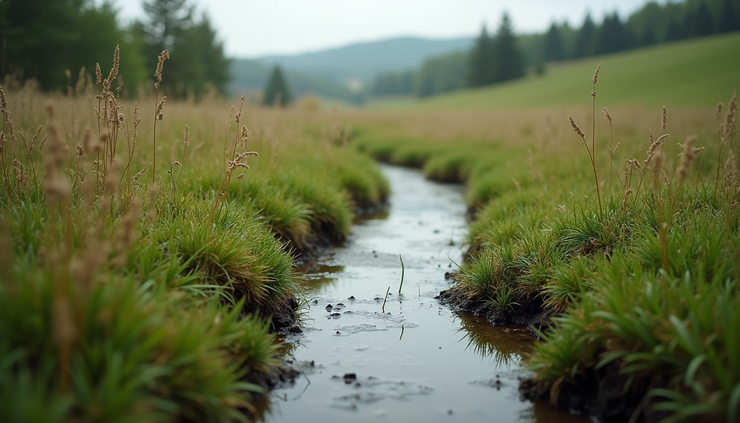
Swales are shallow, broad channels dug into the ground, usually along the contour lines of a slope. Their main purpose is to capture and slow down rainwater runoff. By doing this, swales allow water to soak into the soil rather than rushing downhill and causing erosion.
Unlike ditches that quickly move water away, swales hold water temporarily. This helps recharge groundwater and supports vegetation growth. Swales can be simple grass-lined trenches or more complex structures with berms (raised edges) on the downhill side to hold water.
How Swales Work in Water Management
Swales manage water by:
Slowing runoff: When rain falls, water flows downhill quickly, carrying soil with it. Swales interrupt this flow, reducing speed and preventing soil loss.
Increasing infiltration: Water held in swales seeps into the ground, replenishing underground water reserves.
Filtering pollutants: As water moves slowly through vegetation in swales, sediments and some pollutants settle out, improving water quality.
Supporting plants: Moist soil in and around swales encourages plant growth, which further stabilizes the soil and enhances the ecosystem.
These functions make swales a valuable tool for managing stormwater in urban, agricultural, and natural settings.
Types of Swales and Their Uses
Swales come in different forms depending on their purpose and location:
Contour swales: Dug along contour lines on slopes to capture runoff evenly across a hillside.
Berm and swale systems: Combine a swale with an adjacent raised berm to hold water longer.
Bioswales: Designed for urban areas, these swales include plants that filter pollutants from stormwater before it reaches drainage systems.
Permeable swales: Built with porous materials to enhance water infiltration in areas with compacted soil.
Each type serves a specific role but shares the goal of improving water retention and reducing erosion.
Practical Examples of Swale Use
Swales have been successfully used worldwide in various settings:
Permaculture farms: Many farms use swales to capture rainwater and improve soil moisture for crops. For example, in Australia, swales help farms survive dry seasons by storing water in the soil.
Urban stormwater management: Cities like Portland, Oregon, use bioswales along streets to reduce flooding and filter pollutants from runoff.
Erosion control on slopes: In hilly regions, swales prevent landslides and soil loss by stabilizing the ground and slowing water flow.
These examples show how swales adapt to different environments and needs.
Benefits Beyond Water Management
Swales offer several additional benefits:
Improved soil health: By increasing water infiltration, swales support microbial activity and nutrient cycling in the soil.
Enhanced biodiversity: Vegetation in swales provides habitat for insects, birds, and small animals.
Reduced flooding risk: By holding water temporarily, swales lower the chance of sudden floods downstream.
Cost-effective solution: Swales are relatively inexpensive to build and maintain compared to engineered drainage systems.
These advantages make swales a sustainable choice for land and water management.
How to Design and Build a Swale
Designing a swale requires understanding the land’s slope, soil type, and rainfall patterns. Key steps include:
Survey the land: Identify contour lines using tools like an A-frame level or laser level.
Plan the swale path: Mark a gentle, continuous line along the contour.
Dig the swale: Excavate a shallow trench, usually 1 to 3 feet wide and about 1 foot deep.
Create a berm: Use the soil from the trench to build a raised edge on the downhill side.
Plant vegetation: Grass, native plants, or shrubs help stabilize the swale and improve water absorption.
Regular maintenance involves clearing debris and checking for erosion or blockages.
Challenges and Considerations
While swales are effective, they require careful planning:
Soil type matters: Heavy clay soils may need additional measures to improve infiltration.
Proper sizing: Swales must be sized to handle expected rainfall without overflowing.
Land use: Swales work best on slopes; flat areas may need different water management techniques.
Maintenance: Neglect can lead to clogged swales or erosion of berms.
Understanding these factors ensures swales function as intended.


Comments