Markings That Organize Commercial Parking Areas
Line Striping in Ulster Park for Parking Stalls and Directional Markings
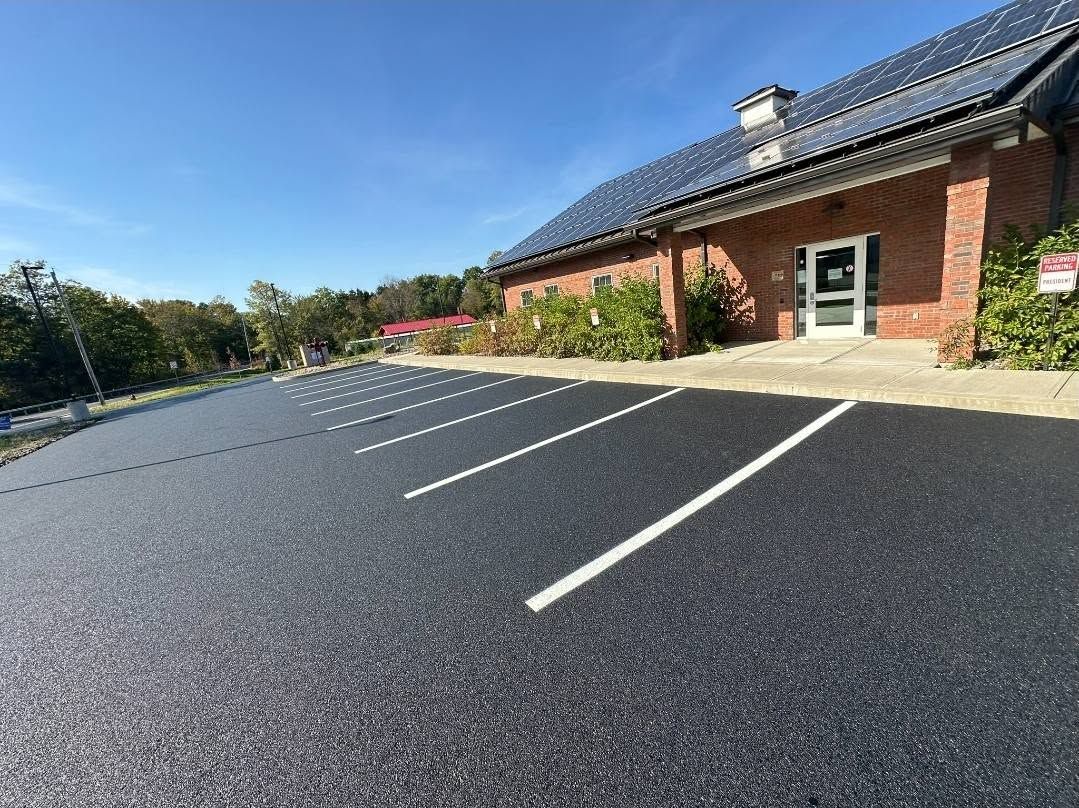
Fresh pavement markings improve visibility and traffic organization across commercial parking areas where faded lines create confusion and reduce usable space. Line striping in Ulster Park represents the finishing step that transforms a newly paved or maintained lot into a clearly defined, organized space. Triple M Paving & Excavating applies parking stall lines, directional arrows, and other pavement markings appropriate to your property's layout and function.
Striping involves applying durable paint in precise layouts that designate parking spaces, driving lanes, pedestrian crossings, and restricted zones. The work follows property-specific measurements and local requirements, creating consistent spacing and alignment that maximizes parking capacity while maintaining safe circulation patterns.
Arrange a site visit and free estimate to review your striping needs and establish a marking plan for your parking area.
Why Fresh Markings Improve Paved Lot Function
Striping work begins with layout confirmation to establish stall dimensions, aisle widths, and marking positions that meet both property requirements and accessibility standards. Durable pavement marking paint is applied using equipment that produces clean, consistent lines with defined edges. The markings cure quickly enough to restore parking availability without extended closures.
After striping is completed, drivers immediately recognize parking boundaries and traffic flow patterns that may have been unclear when markings were faded or absent. Vehicles park in organized rows rather than angled haphazardly, pedestrian zones become visibly distinct from driving lanes, and the lot presents a well-maintained appearance that reflects positively on your property. Bright, uniform lines also improve visibility during low-light conditions when faded markings become nearly invisible.
Line striping typically follows paving or sealcoating work as the final step in pavement maintenance cycles. The service includes parking stalls, directional markings, and other pavement indicators but does not extend to specialized symbol stenciling or custom graphics unless specifically discussed during planning.
Answers to Frequent Striping Questions
Property managers planning striping projects often want to understand timing, durability, and how markings fit into broader pavement maintenance schedules.
How long does line striping paint last before reapplication is needed?
Striping durability depends on traffic volume and weather exposure, but most commercial parking lot markings require repainting every two to three years as vehicle tires gradually wear away the surface layer.
When should striping be scheduled after new paving or sealcoating?
Fresh pavement should cure fully before striping is applied—typically a minimum of 30 days after paving and 24 to 48 hours after sealcoating, depending on temperature and humidity conditions in Ulster Park.
What factors affect striping layout and spacing?
Layout depends on property dimensions, traffic patterns, accessibility requirements, and local regulations that dictate minimum stall widths, aisle clearances, and designated accessible parking ratios.
Does weather affect when striping can be applied?
Striping requires dry pavement and temperatures above 50 degrees Fahrenheit for proper paint adhesion and curing, which limits application during Ulster Park's colder months and wet spring periods.
Can faded striping be refreshed without repaving the lot?
Yes, striping can be reapplied over sound pavement to restore visibility and organization even when the asphalt surface itself remains in good condition and does not require resurfacing.
Triple M Paving & Excavating coordinates line striping with paving and pavement maintenance work to deliver clearly marked, organized commercial parking areas. Request a free estimate to discuss your property's striping requirements and schedule the work appropriately.