Prepare Worn Pavement for Lasting Repairs
Asphalt Milling in Ulster Park for Deteriorated Surface Layers
Severely worn asphalt surfaces across commercial properties and larger paved areas sometimes require surface layer removal rather than overlay alone. Triple M Paving & Excavating performs asphalt milling in Ulster Park when the deteriorated layer needs to come off before resurfacing can restore function and appearance. You'll recognize the need for milling when pavement shows deep cracking, surface delamination, or uneven wear that an overlay would simply replicate rather than correct.
Milling uses professional equipment to grind off the damaged asphalt layer to a specified depth, leaving a clean, textured base ready for the next paving phase. The process removes oxidized, cracked material while preserving the underlying base layers that remain structurally sound, creating a more stable foundation for resurfacing or overlay application.
Request a pavement evaluation and free estimate to determine whether milling is appropriate for your worn surface.
What Milling Accomplishes Before Resurfacing
Milling creates a uniform depth and texture across the prepared area, removing the deteriorated surface without disturbing compacted base materials below. The process addresses severely worn surfaces more efficiently than full-depth removal when the base remains intact and drainage hasn't compromised subsurface stability. Professional milling equipment controls depth precisely, leaving a bonding surface that new asphalt adheres to securely.
Once milling is complete, you'll see a textured gray surface where the damaged black asphalt layer previously existed. The milled area sits lower than adjacent unmilled pavement, ready to receive new asphalt that restores grade and smoothness. Surface irregularities and failed material are gone, replaced by a clean base that supports durable resurfacing.
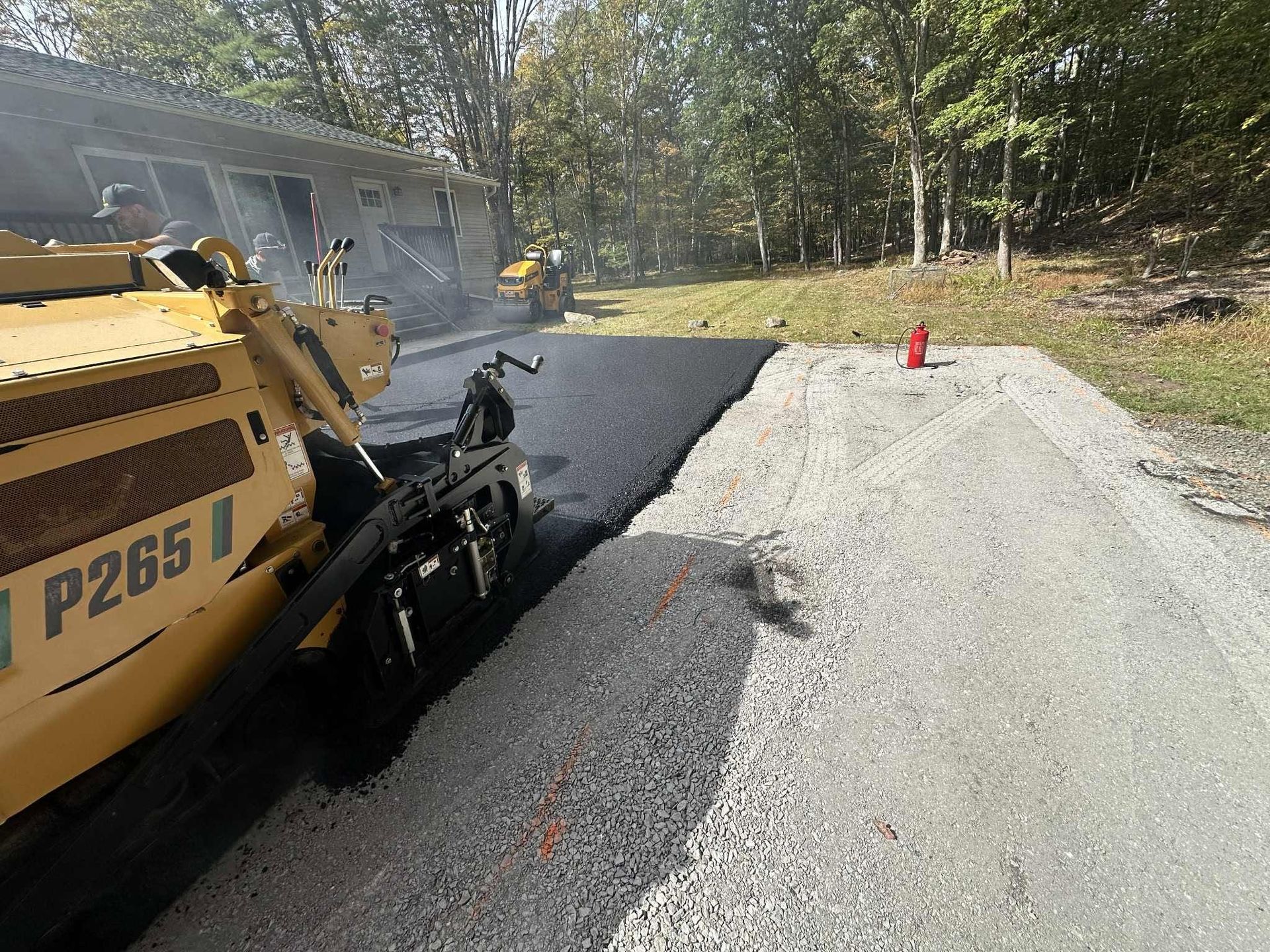
Milling typically precedes resurfacing or overlay application as part of a comprehensive pavement restoration plan. The work generates millings—recycled asphalt material often reused in base applications—and prepares edges where new asphalt transitions to existing pavement.
Common Questions About Asphalt Milling
Property managers often ask about milling when planning pavement repairs, particularly when deciding between full removal and surface preparation methods.
What pavement conditions require milling instead of overlay alone?
Milling becomes necessary when surface cracking has progressed to delamination, when the existing surface shows significant unevenness, or when adding overlay thickness would create drainage problems or elevation conflicts with adjacent surfaces.
How does milling differ from complete asphalt removal?
Milling removes only the damaged surface layer to a controlled depth, typically one to three inches, while full removal excavates all asphalt layers down to the base material—milling preserves the structural base when it remains sound.
What happens to the material removed during milling?
The milled asphalt, called millings or reclaimed asphalt pavement, can be reused as aggregate base material in other projects or recycled into new asphalt mixes, reducing waste and material costs.
When should milling be scheduled relative to resurfacing?
Milling and resurfacing are usually completed in close succession to prevent the exposed milled surface from accumulating debris or moisture that could compromise bonding when new asphalt is placed.
Does milling address base problems beneath the asphalt surface?
Milling only removes surface asphalt; if the base has failed due to poor drainage or insufficient compaction, those issues must be corrected separately before resurfacing restores the pavement.
Triple M Paving & Excavating provides asphalt milling for commercial parking areas and larger paved surfaces where surface layer removal creates a cleaner base for restoration. Contact us to arrange an on-site assessment and free estimate for your pavement project.