Commercial Surfaces That Handle Traffic Flow
Parking Lot Paving in Ulster Park for properties with potholes, uneven pavement, and standing water
Hudson Valley commercial properties often face parking lot deterioration that creates liability concerns, customer complaints, and a worn appearance that affects business perception. Triple M Paving & Excavating handles parking lot paving for properties where potholes damage vehicles, uneven sections cause tripping hazards, or water collects in low areas and freezes into ice patches each winter. The work transforms heavily trafficked surfaces into smooth, properly drained pavement that supports daily use while presenting a clean, professional property appearance.
Parking lot paving requires coordinating site access, staging work to minimize business disruption, and addressing drainage issues that contribute to accelerated pavement failure. The process includes removing failed asphalt where settling has occurred, regrading to eliminate low spots, installing or repairing drainage structures, and placing new asphalt in lifts compacted to commercial density standards.
Schedule a property assessment to evaluate pavement condition and discuss phasing options that keep your business accessible during construction.
What Changes After Parking Lot Paving Completes
Commercial paving addresses the functional and visual problems that deteriorated parking lots create. Site preparation corrects the drainage failures that caused water to collect and undermine the pavement, grading reestablishes proper slope toward catch basins or edges, and the new asphalt surface eliminates the potholes and rough sections that slow traffic and damage vehicles. Triple M Paving & Excavating uses commercial compaction equipment and quality asphalt mixes designed to withstand the turning, braking, and constant loading that parking lots endure.
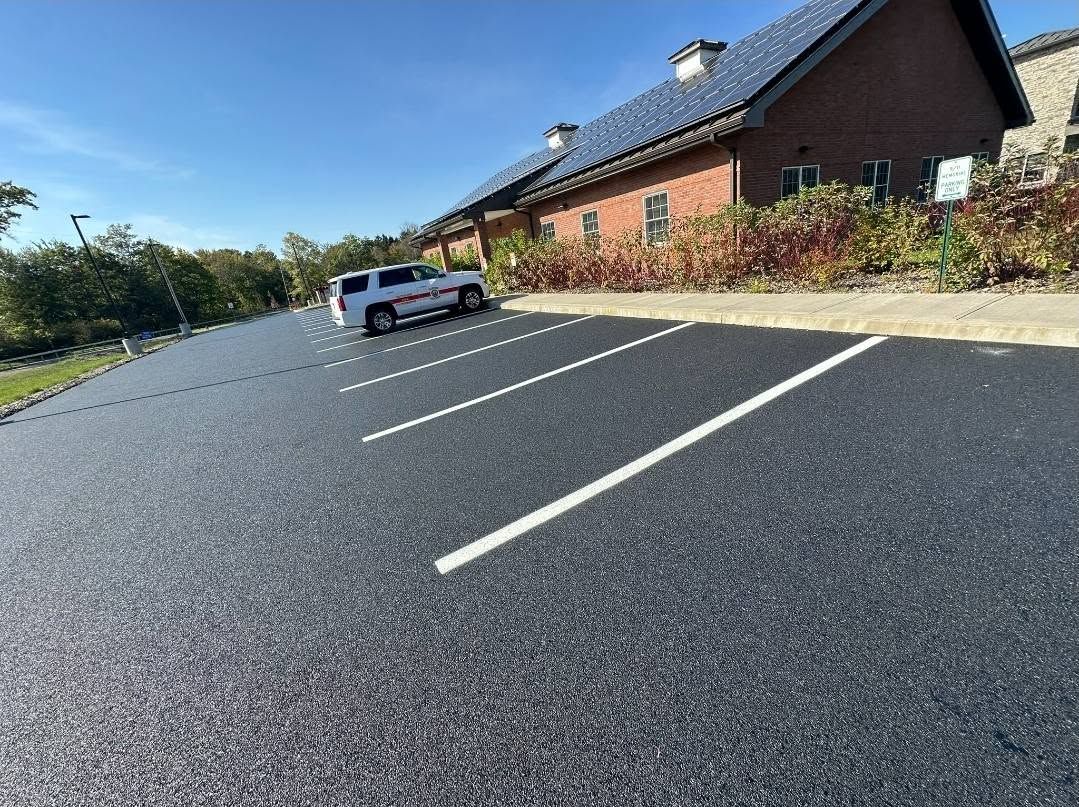
Once paving finishes, your property gains a uniform black surface free of depressions, cracks, and abrupt transitions. Vehicles move smoothly through parking spaces and drive lanes without bouncing over potholes or scraping on uneven sections, water flows off the pavement instead of pooling in low spots, and the lot presents a maintained appearance that reflects positively on your business. Snow removal also becomes more efficient, as plow blades glide over smooth pavement instead of catching on broken edges and sunken areas.
The work typically includes striping layout, ADA-compliant accessible spaces, and coordination with existing curbs, sidewalks, and drainage structures. Some projects require phased construction to keep portions of the lot open during business hours, while others benefit from complete repaving when seasonal closures or reduced traffic allow full-site access.
Answers to Parking Lot Paving Questions
Commercial property owners evaluating parking lot improvements typically ask about scheduling, drainage, and how paving affects daily operations.
What causes parking lots to fail faster than driveways?
Commercial lots experience heavier traffic loads, more frequent turning and braking forces that stress pavement, and larger surface areas where drainage problems develop—these factors accelerate wear and require more robust base preparation than residential driveways demand.
How do you handle drainage during parking lot paving in Ulster Park?
The crew adjusts grades to direct water toward existing catch basins or property edges, repairs or installs drainage structures where water previously collected, and ensures the finished pavement slopes enough to prevent standing water without creating uncomfortable driving angles.
Can parking lot paving be phased to keep businesses operational?
Yes, many projects are staged in sections that allow customers to access the building while work progresses in closed-off areas, with final striping and transitions completed once all pavement is in place and cured.
What should property owners look for when comparing paving contractors?
Verify that the contractor uses commercial-grade equipment for proper compaction, provides a detailed breakdown of base preparation and asphalt thickness, and explains how drainage issues will be addressed—shortcuts in these areas lead to premature pavement failure.
How long before a newly paved parking lot can handle full traffic loads?
Light vehicle traffic can resume within 24 to 48 hours, though heavy trucks and delivery vehicles should avoid the surface for several days to allow the asphalt to fully cure and reach maximum density under Ulster Park temperature conditions.
Triple M Paving & Excavating provides free parking lot paving estimates that account for drainage corrections, phasing requirements, and striping coordination. Request a site consultation to review your commercial property's pavement needs and project timing.