Driveways Built for Daily Vehicle Use
Driveway Paving in Ulster Park for worn gravel, cracked pavement, and uneven entrances that pool water
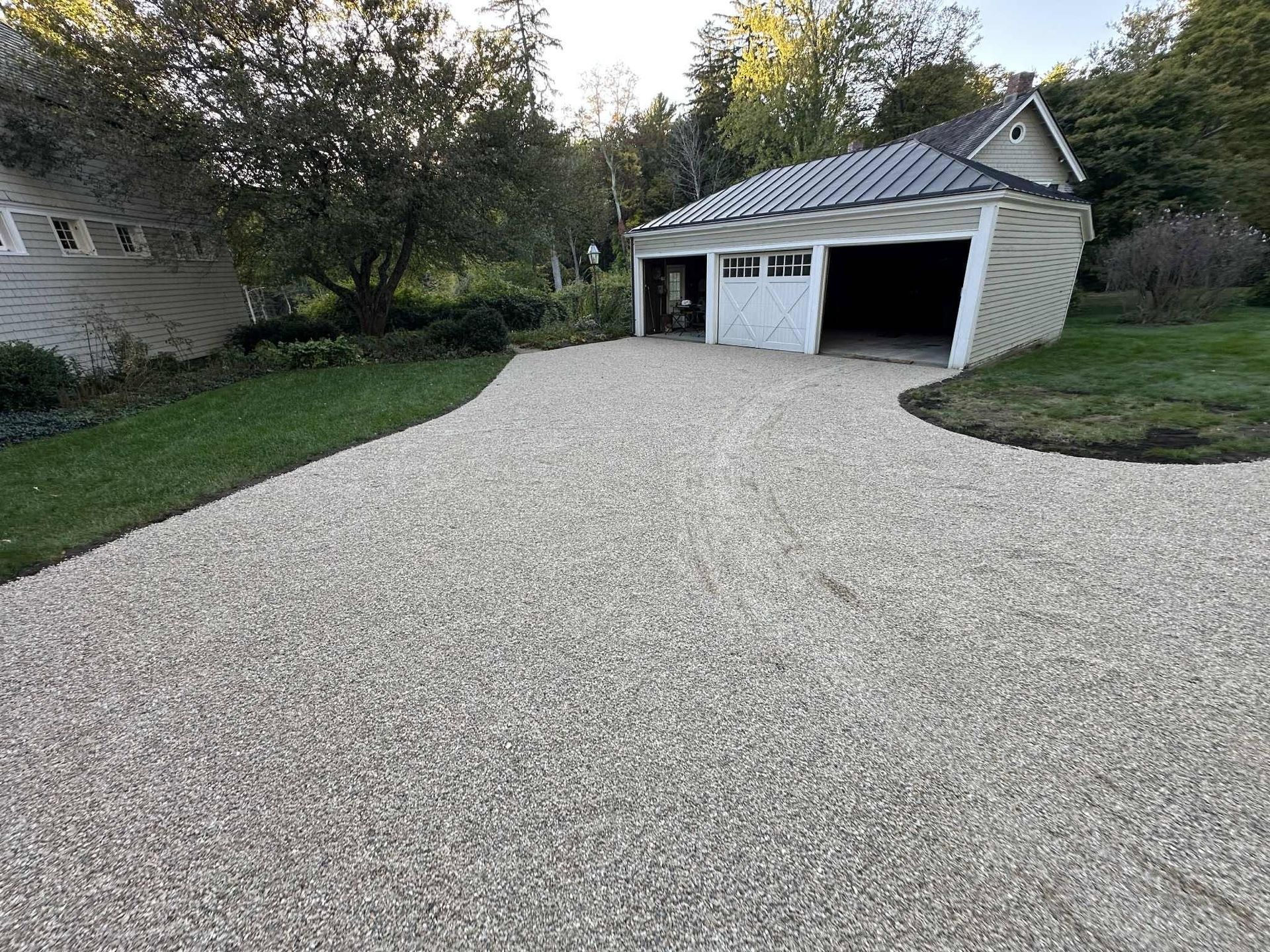
Rough gravel that shifts under tires, cracked asphalt with grass growing through the gaps, and uneven grades that collect water near garage doors create daily frustration for homeowners. Triple M Paving & Excavating transforms these deteriorated surfaces into smooth, compacted asphalt driveways designed for regular vehicle traffic and Hudson Valley weather. The work addresses properties where the current entrance has become impassable during wet weather, where loose stone damages vehicles, or where the driveway has sunk and no longer drains properly.
Driveway paving begins with removing failed material, regrading the site to direct water away from structures, and installing a compacted stone base that remains stable when moisture freezes and expands below the surface. The asphalt layer is then placed in controlled thickness and rolled with commercial equipment to eliminate voids and create a dense, weather-resistant surface.
Arrange an on-site evaluation to assess your driveway's current condition and drainage requirements.
How Driveway Paving Addresses Deteriorated Surfaces
The paving process corrects the underlying issues that caused your original driveway to fail. Excavation removes unstable soil and old pavement, grading establishes proper slope so water moves off the surface rather than pooling at the center or edges, and the stone base provides a firm platform that distributes vehicle weight evenly. Without this preparation, new asphalt will crack and settle into the same low spots that plagued the old surface.
After paving completes, you gain a smooth black surface that vehicles cross without bouncing, scraping, or kicking up loose stone. Water sheets off the driveway instead of soaking into gravel or collecting in cracks, snow removal becomes straightforward without ruts or uneven sections catching plow blades, and the entrance presents a finished appearance that defines property boundaries. Asphalt driveways in Ulster Park handle freeze-thaw cycles more effectively than gravel because the sealed surface prevents water infiltration that leads to frost heaving.
The finished driveway includes clean edges where asphalt meets grass or existing pavement, transitions to garage floors or street connections, and a uniform surface free of depressions or humps. Homeowners also notice improved access during wet weather, as asphalt sheds rain and snowmelt instead of turning soft and muddy like gravel.
Common Driveway Paving Questions
Homeowners considering new or replacement driveways often ask about preparation work, material choices, and how long paving takes before scheduling the project.
What causes driveways to crack and settle over time?
Water infiltration is the primary culprit—when moisture penetrates cracks or porous surfaces, it freezes and expands during winter, breaking apart the pavement and eroding the base material beneath, which leads to further settling and surface failure.
How does site preparation differ for gravel driveways versus failed asphalt?
Gravel removal requires excavating to stable soil and installing a proper stone base where none existed, while failed asphalt often needs partial base repair where settling occurred—both situations demand regrading to establish correct drainage before new pavement is placed.
When is the best time to pave a driveway in Ulster Park?
Late spring through early fall provides the warm, dry conditions asphalt requires for proper placement and compaction, with scheduling flexibility depending on weather patterns and contractor availability during the busiest paving months.
What thickness of asphalt works for residential driveways?
Most residential driveways receive two to three inches of compacted asphalt over a prepared stone base, providing adequate strength for passenger vehicles and light trucks without the heavier sections required for commercial traffic.
How long does a properly paved driveway last before needing replacement?
A well-constructed asphalt driveway with correct base preparation and regular sealcoating can last 20 to 30 years in Hudson Valley conditions, though longevity depends on drainage quality, traffic loads, and whether maintenance is performed as the surface ages.
Triple M Paving & Excavating provides free driveway paving estimates based on your property's current surface condition, grade, and access. Contact our team to schedule a site visit and review options for replacing worn gravel or deteriorated pavement with a finished asphalt surface.